Living as a non-resident student in Milan means dealing with constant movement. Changing apartments, handling logistics, and repeatedly deciding which books, objects, and personal items are worth carrying from one place to another becomes routine. Over time, this cycle of packing, transporting, and discarding turns into a practical challenge that shapes daily life. You learn to reduce, reorganize, and adapt, but the process remains tiring and inefficient.
Depero was created directly in response to this reality. We observed the recurring issues young people face while moving: furniture that is too heavy, storage solutions that don’t adapt to small or temporary spaces, and disposable items bought out of necessity and abandoned after one or two uses. We wanted to design a system that addresses those problems—a solution that is light, adaptable, resilient, and able to move with its users rather than work against them. Depero is built around the needs of people who live in transition and require functional objects that can keep up.
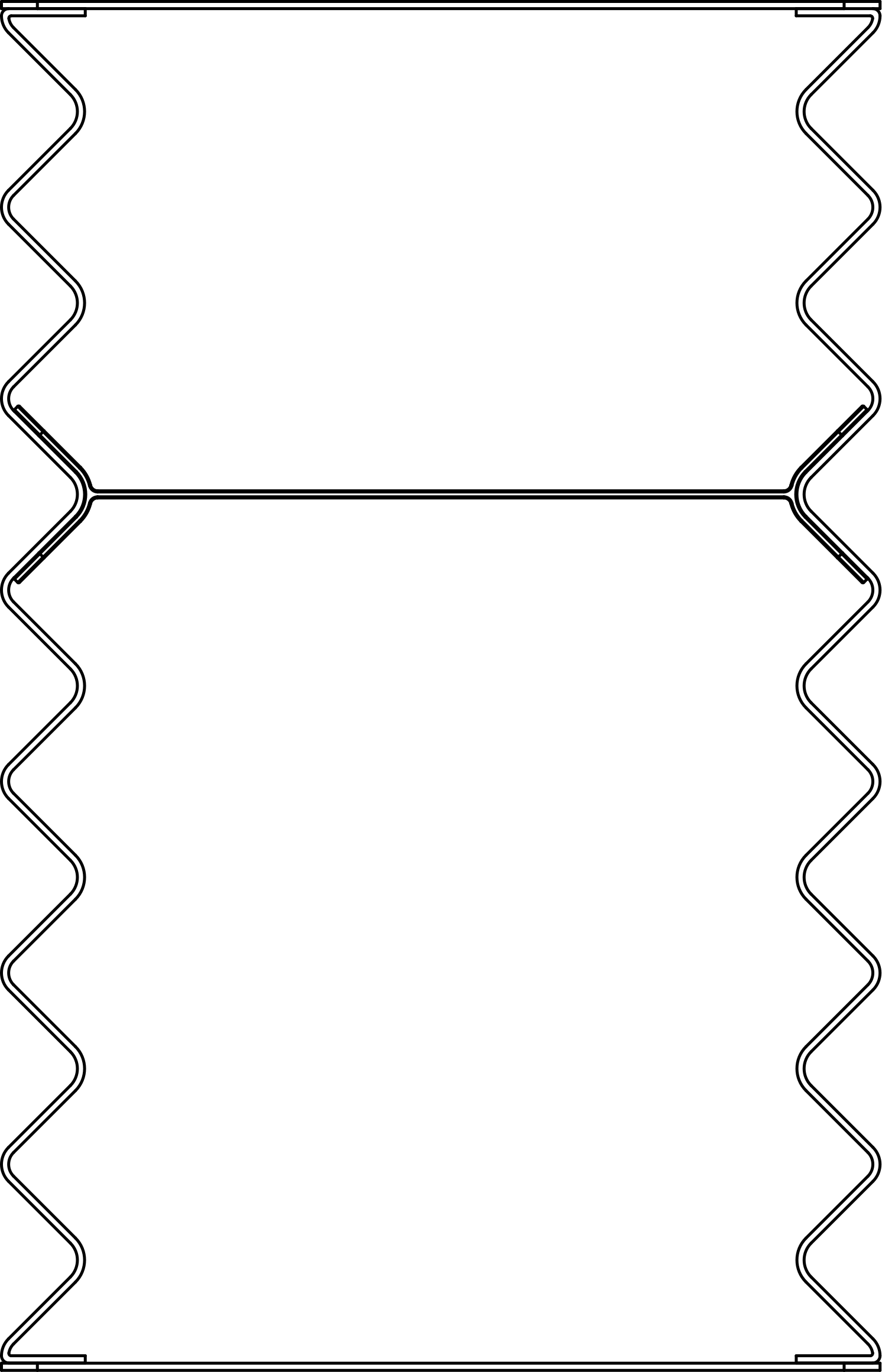
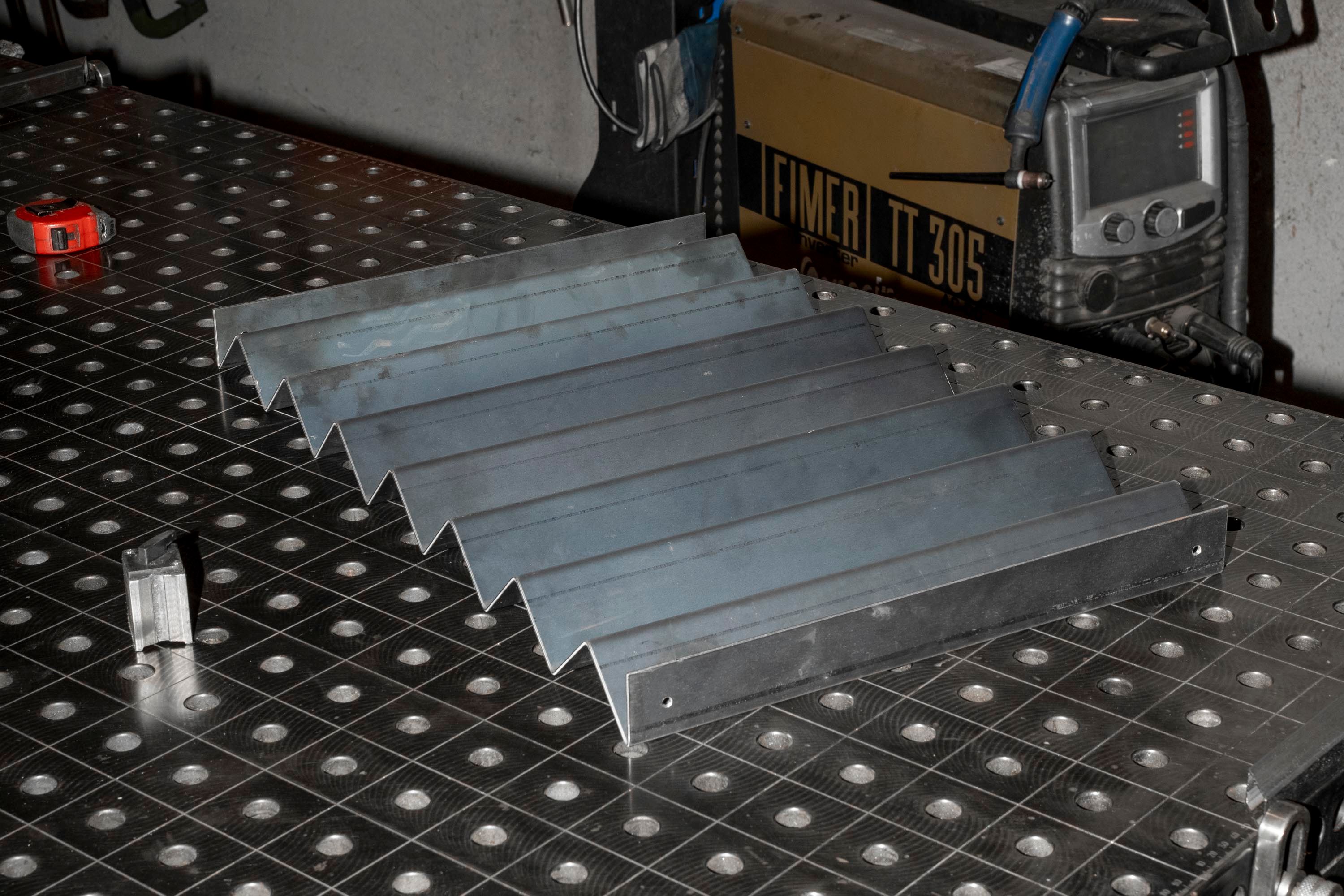
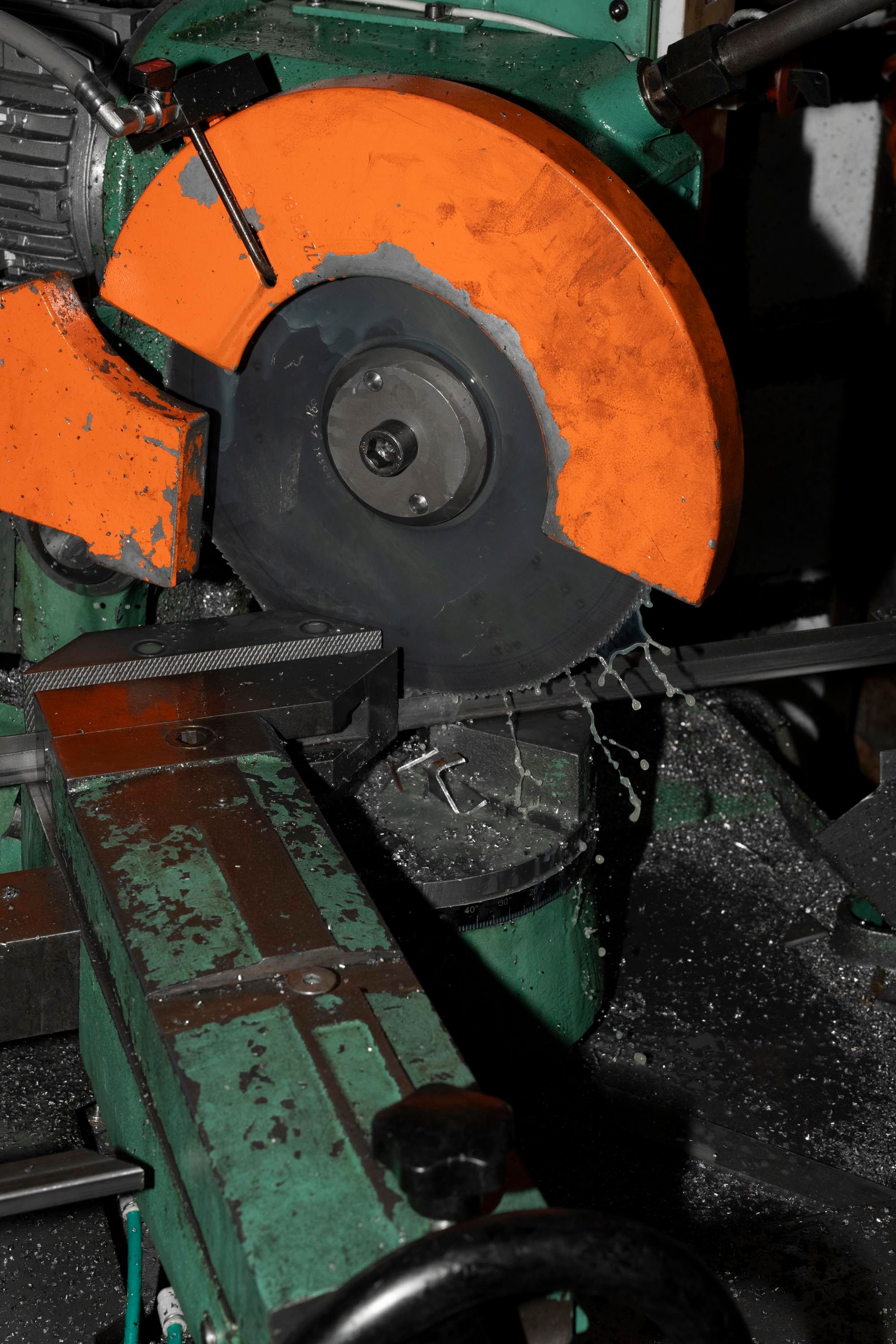
This led us to experiment with folded metal sheets. The aim was clear: create strong structural elements with minimal volume and weight. To reach this goal, we worked with artisans and manufacturers to test different metals and thicknesses, evaluating how each material behaved when folded, welded, or finished. Through these tests, we learned how factors like weldability, stiffness, and surface treatment influenced the end result. Iron became the most suitable choice—it offered the right structural stability, could be welded efficiently by local artisans, and allowed us to apply the desired surface finishing on the final prototype.
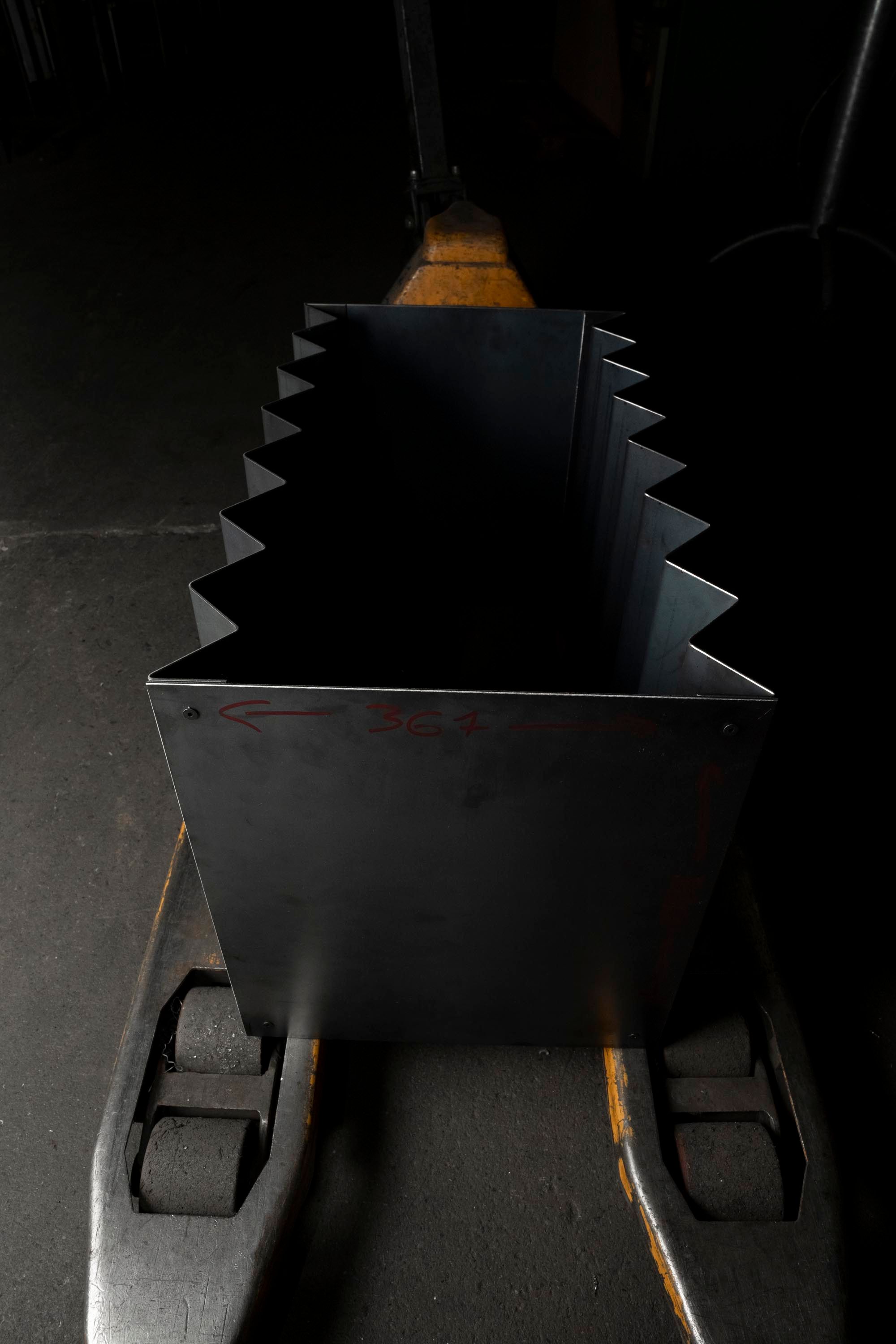
During prototyping, we encountered a critical point in the project. One of the early prototypes lacked a cross-bracing element and therefore showed noticeable movement along the longitudinal axis. The shelf was still usable, but its behavior raised a fundamental question: should we accept this characteristic and let it become part of a more unconventional, “imperfect on purpose” version of the product, or should we solve the instability by adding reinforcement, even if that meant compromising part of the original visual idea? This moment exposed the ongoing balance in our practice between experimentation and technical problem-solving. We have not finalized the solution yet, and this decision remains part of the development process.
Prototyping was essential to understand the actual complexity of the system. Only by building and testing the object were we able to find the right combination of sheet thickness, bending angles, and structural stiffness. Digital models helped, but the real progress came from hands-on experimentation. Through this process, technical challenges became learning opportunities, and each iteration improved the design. In our approach, experimentation is not separate from the project—it is the project, and it is what drives it forward.